LED video walls built on NovaStar Infinity
Infinity is NovaStar's newest way of driving an LED wall. It controls how hard each LED is driven as well as how long it is lit, and the difference shows where LED walls have always been weakest: in the dark end of the picture and in front of a camera.
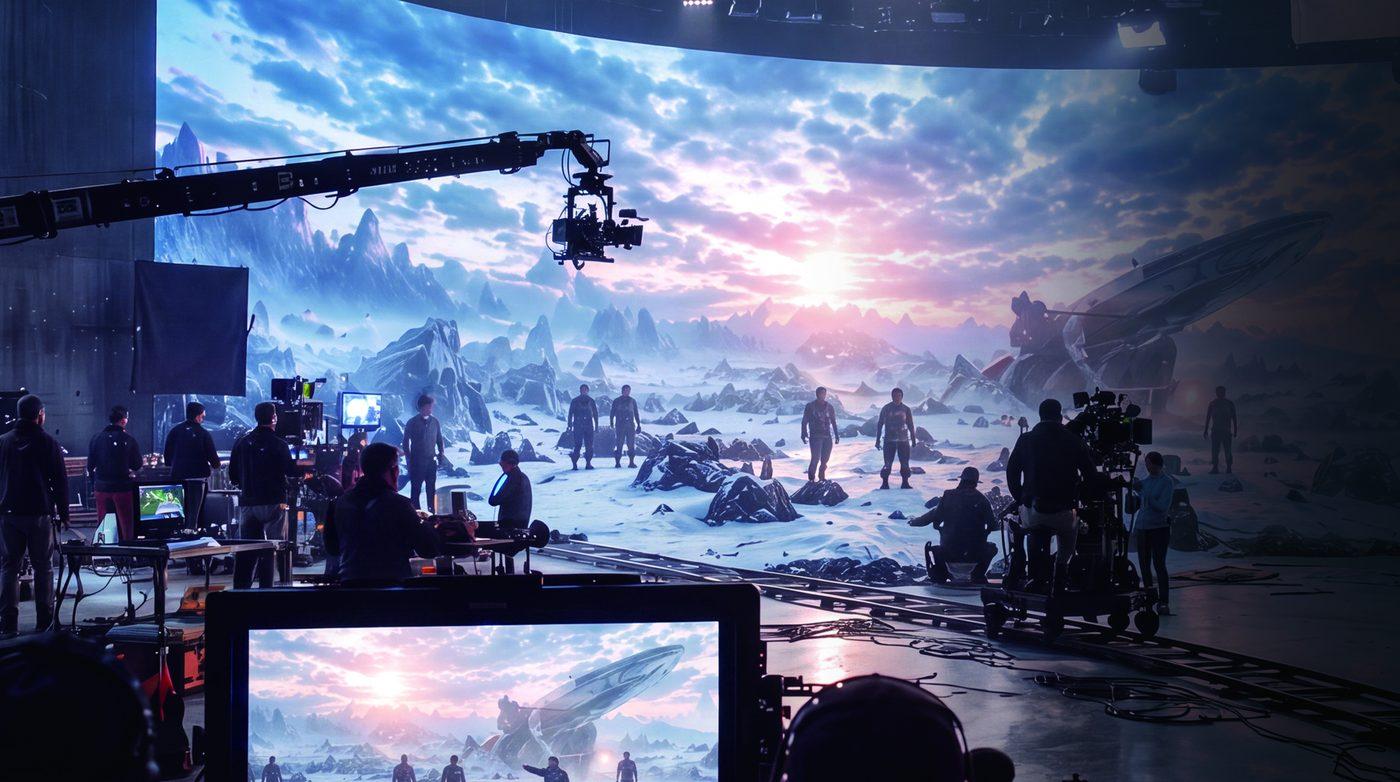
A conventional LED wall sets brightness one way: it flashes each LED very quickly and varies how long it stays on. That works at full brightness. Turn the wall down for a dark scene, a dim room, or a camera, and the pulses get too short to control, so detail drops out of the shadows and gradients show bands. Infinity adds a second control, the current through each LED. With both working together the wall keeps its full range of steps at low brightness, and color stays put as the picture dims.
On camera, the same design keeps refresh rate high at low brightness, which is where scan lines and flicker normally appear. The wall matches its timing to the camera shutter, and it follows the frame rate of the source automatically, so switching between a 24 frame film feed, a 60 frame broadcast feed, and a high frame rate source does not need a reconfigure. That is why it is being specified for touring stages, broadcast sets, and virtual production.
For color-critical work, the platform takes 10 and 12 bit sources including HDR10 and HLG, switches between BT.709, DCI-P3, and BT.2020, and accepts a 3D LUT for a calibrated look. The wall is calibrated across its whole brightness range rather than at one level, and it compensates as the panels warm up, so the picture at hour three matches the picture at minute one.
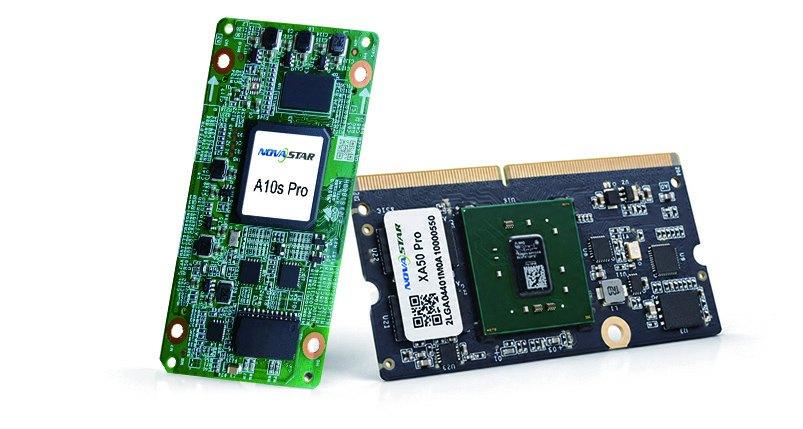
Infinity is built into the wall, from the driver chips on each module through the receiving cards to the controller, so it is something to choose when the wall is ordered. We offer it on rental and stage panels, on fine-pitch indoor walls, and on COB walls for home theaters and screening rooms. Tell us what the wall has to do and we will spec the build and the controller to match.

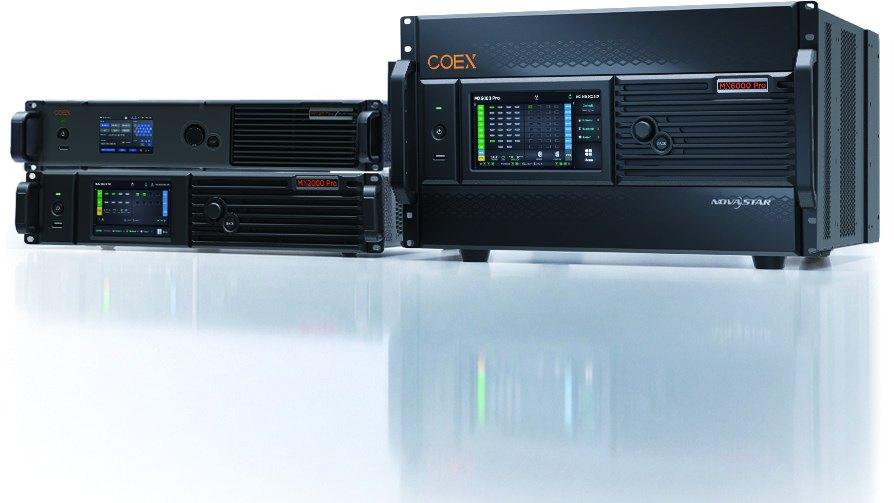
Infinity is a NovaStar platform. The controller sits in the rack, a receiving card sits in every cabinet, and the driver chips sit on the LED modules themselves.
How it goes
Wall size, viewing distance, and mounting, sized on the calculator and confirmed on site.
Cabinets go on rails or a frame, leveled and locked, with structure by a licensed contractor where needed.
Power, data, processor, and a full pixel-map test before anyone sees content.
Your team learns the system at handoff, and our support line stays open after.
Questions we get
What is NovaStar Infinity?
It is NovaStar's current LED display platform: driver chips, receiving cards, controllers, and calibration designed as one system. Its main change is hybrid driving, which controls the current through each LED as well as the length of each pulse.
What does it improve?
Low-brightness picture quality and on-camera behavior. Shadow detail and gradients hold when the wall is dimmed, refresh rate stays high at low brightness, and HDR sources are handled natively.
Can an existing wall be upgraded to Infinity?
Not by swapping the processor. The driver chips are on the LED modules themselves, so Infinity is chosen when the wall is built.
Is it for rental walls or permanent installs?
Both. Touring and broadcast use it for clean camera performance, and permanent rooms such as home theaters and screening rooms use it for black level and film playback.
Which controllers does it use?
NovaStar's MX series, sized to the pixel count of the wall, with inputs that include HDMI 2.1, DisplayPort 1.4, 12G-SDI, and ST 2110 for broadcast facilities.
How much, and how soon?
Tell us how many, where it is going, and when you need it. We come back with a package price and a delivery date.